


Last updated: May 21, 2026
Quick Answer: Conjunctivitis — commonly called pink eye — comes in three main forms: viral, bacterial, and allergic. Viral and bacterial types are contagious; allergic conjunctivitis is not. Each type has distinct symptoms, causes, and treatments. Knowing which type you have determines whether you need antibiotics, antihistamines, or simply time and supportive care.
Help at Allergist Services in Forest Hills
Key Takeaways
- Viral conjunctivitis is the most common type in adults and is caused by viruses like adenovirus; it resolves on its own within 1–2 weeks.
- Bacterial conjunctivitis is the most common type in young children and produces thick yellow or green discharge; it typically requires antibiotic eye drops.
- Allergic conjunctivitis is not contagious and is triggered by allergens like pollen, pet dander, or dust mites; it often requires antihistamine treatment.
- You cannot reliably self-diagnose which type you have based on redness alone — discharge color, itching intensity, and whether one or both eyes are affected all matter.
- Contact lens wearers face a higher risk of worsening eye allergy symptoms and should consult a specialist before continuing lens use during a flare.
- Children in school or daycare settings are most prone to bacterial and viral conjunctivitis due to close contact and hand-to-eye transmission.
- Most cases of allergic conjunctivitis benefit from professional allergy evaluation, especially when symptoms are chronic or seasonal.
- Allergist Services in Forest Hills at NYP Clinic are available 7 days a week, with no long referral waits.
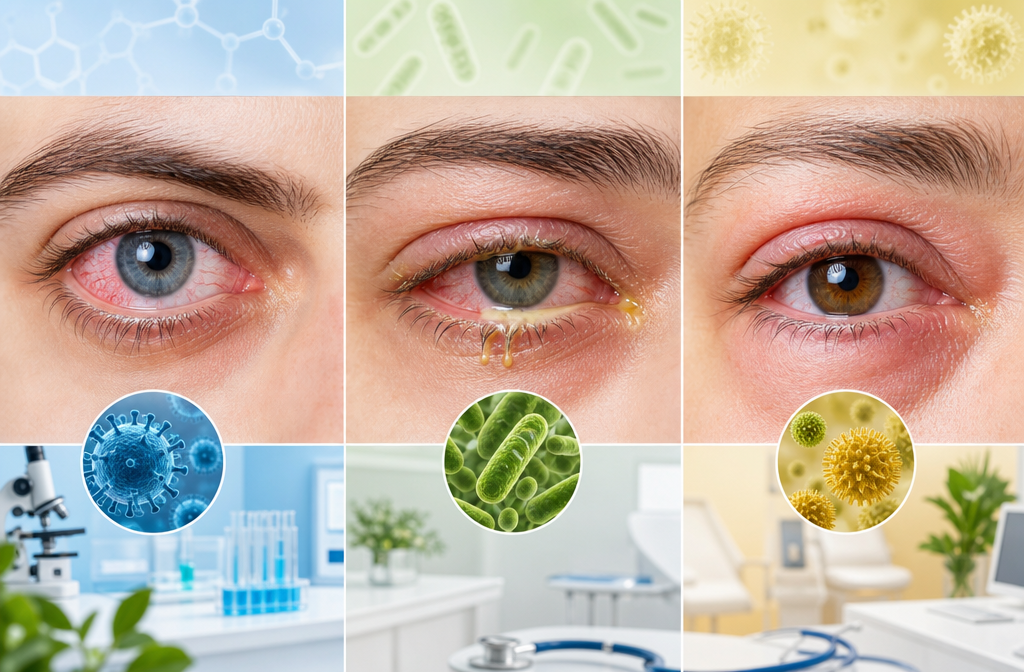
What Exactly Causes Different Types of Conjunctivitis?
Each type of conjunctivitis has a distinct biological cause, and the trigger determines everything about how it spreads, how long it lasts, and how it should be treated.
Viral conjunctivitis is caused most often by adenoviruses, though herpes simplex virus, varicella-zoster, and the virus responsible for COVID-19 can also affect the conjunctiva. It spreads through direct contact with infected secretions or contaminated surfaces.
Bacterial conjunctivitis is typically caused by Staphylococcus aureus, Streptococcus pneumoniae, or Haemophilus influenzae in older children and adults. In newborns, Neisseria gonorrhoeae and Chlamydia trachomatis are the primary concerns and require immediate medical attention.
Allergic conjunctivitis is an immune system response. When the body encounters a trigger — pollen, mold, pet dander, dust mites, or certain eye drops — it releases histamine in the conjunctival tissue, causing the characteristic itching, swelling, and watering. This type is not an infection at all; it’s an inflammatory reaction. Patients with other allergic conditions like asthma, eczema, or hay fever are significantly more likely to develop allergic conjunctivitis. For a broader look at how immune responses drive conditions like this, see our article on what conditions cause a weakened immune system.
How Can I Tell If My Pink Eye Is Viral or Bacterial?
The most reliable distinguishing feature is the type of discharge. Viral pink eye produces watery or slightly mucous discharge, while bacterial pink eye produces thick, yellow or green pus that often crusts the eyelids shut overnight.
Here’s a practical comparison:
| Feature | Viral | Bacterial | Allergic |
|---|---|---|---|
| Discharge | Watery, clear | Thick, yellow/green | Watery, clear |
| Itching | Mild | Mild to moderate | Intense |
| Eyes affected | Usually one first, then both | Often one eye | Usually both |
| Contagious | Yes | Yes | No |
| Associated symptoms | Cold, sore throat | None typically | Sneezing, runny nose |
| Treatment | Supportive care | Antibiotic eye drops | Antihistamines, allergen avoidance |
Common mistake: Many people assume any yellow discharge means they need antibiotics. In fact, even viral infections can produce some mucous discharge, especially in the morning. A clinician’s evaluation is the only reliable way to confirm the type and avoid unnecessary antibiotic use.
Are Allergic Eye Infections Contagious?
Allergic conjunctivitis is not contagious. It cannot spread from person to person because it is not caused by a virus or bacteria — it is a localized allergic reaction in the eye’s mucous membrane.
This distinction matters practically. If your child has red, itchy eyes and a runny nose during spring allergy season, they do not need to stay home from school on contagion grounds. However, if there’s any doubt about whether the cause is allergic or infectious, a clinical evaluation is important before sending a child back into a group setting.
Viral and bacterial conjunctivitis, by contrast, are both highly contagious. Viral forms in particular spread easily in households, schools, and workplaces. Handwashing, avoiding touching the eyes, and not sharing towels or pillowcases are the most effective prevention measures.
Which Type of Conjunctivitis Is Most Common in Kids?
Bacterial conjunctivitis is the most common type in young children, particularly those under 5 years old in daycare or school settings. Viral conjunctivitis becomes more prevalent with age.
Children are more susceptible for straightforward reasons: they touch their faces frequently, share toys and surfaces, and are in close contact with peers. Haemophilus influenzae is the most common bacterial cause in children in the United States, according to the American Academy of Ophthalmology.
Allergic conjunctivitis is also common in children, especially those with a family history of allergies or asthma. If your child has recurring episodes of red, itchy eyes — particularly in spring or fall — an allergist evaluation is worth pursuing. Our signs you should get allergy testing and treatment article outlines the key indicators that testing is appropriate.
Differences Between Viral and Bacterial Eye Infections: A Closer Look
Beyond discharge and itching, several clinical details separate viral from bacterial conjunctivitis.
Viral conjunctivitis:
- Often begins in one eye and spreads to the other within days
- Frequently accompanies an upper respiratory infection (cold, sore throat, swollen lymph nodes)
- May cause significant light sensitivity
- Resolves without antibiotics in 1–2 weeks
- Caused by highly contagious viruses; outbreaks in schools and offices are common
Bacterial conjunctivitis:
- Can affect one or both eyes simultaneously
- Eyelids may be stuck together in the morning from dried discharge
- Responds to topical antibiotic drops within 2–5 days
- Rarely causes lymph node swelling (unlike viral)
- More common in contact lens wearers, who face a higher risk of serious bacterial keratitis if untreated
Edge case: Chlamydial conjunctivitis is a form of bacterial conjunctivitis that does not respond to standard antibiotic eye drops and requires oral antibiotics. It is often associated with sexually transmitted infection and can be missed if a clinician assumes it is a common bacterial cause. If standard antibiotic drops aren’t working after a week, follow up with your provider.
Are Some People More Prone to Getting Conjunctivitis?
Yes. Certain health conditions, behaviors, and environmental factors increase the likelihood of developing conjunctivitis.
Higher-risk groups include:
- People with seasonal or year-round allergies (atopic individuals)
- Contact lens wearers, especially those who sleep in lenses
- Children in group childcare or school settings
- People with a weakened immune system due to illness or medication
- Healthcare workers with regular exposure to infected patients
- Individuals with autoimmune conditions that affect mucosal tissues
People who have had one episode of allergic conjunctivitis are very likely to experience it again, particularly if the underlying allergen is not identified and managed. Understanding the relationship between immune function and allergic conditions is important — see our overview of autoimmune vs. immunodeficiency disorders for context on how immune dysregulation contributes to these patterns.
Can Contact Lenses Make Eye Allergies Worse?
Yes, contact lenses can significantly worsen allergic conjunctivitis symptoms. Lenses act as a surface on which allergens — particularly pollen — accumulate throughout the day, prolonging exposure to the conjunctiva.
Soft contact lenses are more problematic than rigid gas-permeable lenses in this context. Daily disposable lenses are generally the best option for allergy sufferers who cannot switch to glasses, because they eliminate the buildup of allergen deposits that occurs with extended-wear lenses.
During an active allergic flare, most eye care professionals recommend discontinuing contact lens use entirely until symptoms resolve. Continuing to wear lenses while using antihistamine eye drops can also reduce the drops’ effectiveness. If you wear contacts and experience frequent eye irritation, redness, or itching, this warrants a formal evaluation — not just a switch in lens brand.
Home Remedies for Allergic Conjunctivitis Symptoms
For mild allergic conjunctivitis, several at-home measures can reduce discomfort while you await a medical appointment or during low-intensity flares.
Supportive measures that help:
- Cold compresses: Applying a clean, cold, damp cloth over closed eyes for 10–15 minutes reduces histamine-driven swelling and itching.
- Preservative-free artificial tears: Flushing allergens from the eye surface provides temporary relief. Refrigerating the drops enhances the soothing effect.
- Allergen avoidance: Keep windows closed during high pollen days, shower before bed to remove pollen from hair and skin, and use air purifiers indoors.
- Avoid rubbing your eyes: Rubbing releases more histamine and worsens the inflammatory cycle, even though it feels temporarily satisfying.
What doesn’t work: Over-the-counter vasoconstrictors (the “get the red out” drops) reduce redness cosmetically but do not address the underlying allergic response. With frequent use, they cause rebound redness — a condition called medicamentous conjunctivitis — that makes the problem worse over time.
Home remedies are appropriate for mild, occasional symptoms. Persistent, severe, or recurring allergic eye symptoms require professional evaluation and treatment, which may include prescription antihistamine drops, mast cell stabilizers, or immunotherapy.
How Long Does Each Type of Conjunctivitis Typically Last?
Duration varies meaningfully by type, and knowing what to expect helps patients avoid unnecessary follow-up visits — or, conversely, avoid waiting too long when treatment is needed.
- Viral conjunctivitis: 1–2 weeks. The first 3–5 days are typically the most symptomatic. No treatment shortens the course; supportive care manages symptoms.
- Bacterial conjunctivitis: 5–10 days without treatment; 2–5 days with appropriate antibiotic eye drops. Most cases improve noticeably within 48 hours of starting antibiotics.
- Allergic conjunctivitis: Lasts as long as allergen exposure continues. Seasonal allergic conjunctivitis resolves when the pollen season ends; perennial allergic conjunctivitis (triggered by dust mites or pet dander) can persist year-round without treatment.
Decision rule: If symptoms are not improving after 7 days regardless of type, or if vision changes, significant pain, or light sensitivity develops, see a clinician promptly. These signs may indicate a more serious condition like keratitis or uveitis.
When Should I See an Allergist for Eye Inflammation?
See an allergist when eye symptoms are recurring, seasonal, or associated with other allergic conditions like hay fever, asthma, or eczema — and when over-the-counter options are not providing adequate relief.
Specific situations that warrant allergist evaluation:
- Red, itchy eyes that return every spring or fall
- Eye symptoms that persist despite antihistamine use
- Difficulty identifying your specific allergen triggers
- Eye symptoms accompanied by asthma flares or skin reactions
- Children with chronic eye rubbing and redness that disrupts sleep or school
Allergist Services in Forest Hills at NYP Clinic include comprehensive allergy testing to identify specific triggers, followed by a personalized treatment plan. This may include prescription eye drops, oral antihistamines, or allergen immunotherapy (allergy shots or sublingual drops) for long-term desensitization.
NYP Clinic is open 7 days a week — including weekends — so you don’t have to wait until Monday to address symptoms that are affecting your daily life. Walk-in primary care visits are also welcome for initial evaluation.
Common Mistakes People Make Treating Eye Allergies
The most common mistake is treating allergic conjunctivitis with antibiotic eye drops. Antibiotics have no effect on allergic reactions and can cause their own side effects, including antibiotic resistance and contact dermatitis from preservatives in the drops.
Other frequent errors:
- Using vasoconstrictor drops long-term: As noted above, these cause rebound redness with regular use.
- Continuing contact lens wear during a flare: This prolongs allergen exposure and delays recovery.
- Assuming it’s just “dry eye”: Dry eye and allergic conjunctivitis share symptoms but have different treatments. Lubricating drops alone won’t resolve an allergic response.
- Skipping allergy testing: Without knowing your specific triggers, avoidance strategies are guesswork. Formal testing through allergist services in Forest Hills provides a clear, actionable diagnosis.
- Delaying care when vision changes: Any blurring, significant pain, or photophobia alongside red eyes is a reason to seek same-day evaluation, not a reason to try another home remedy.
How Much Does an Allergist Visit Cost Without Insurance?
Without insurance, an initial allergist consultation in New York City typically ranges from $200 to $400 for the office visit alone. Allergy skin testing, if performed, may add $150 to $300 or more depending on the number of allergens tested.
These figures are estimates based on typical NYC-area private-pay rates in 2026; actual costs vary by provider and the complexity of the evaluation.
NYP Clinic participates with almost every major insurance carrier and is committed to serving all patients regardless of ability to pay. If you’re uninsured or underinsured, contact the clinic directly at (718) 997-7100 or visit the contact page to discuss your options before your visit.
FAQ: Types of Conjunctivitis
Can I have more than one type of conjunctivitis at the same time?
Yes, though it’s uncommon. A bacterial infection can sometimes develop on top of a viral one, particularly in contact lens wearers. This is called a secondary infection and typically requires antibiotic treatment.
Is pink eye always pink?
Not exactly. The “pink” or red appearance comes from dilated blood vessels in the conjunctiva. All three types can cause redness, but the shade and distribution vary. Allergic conjunctivitis often produces a more diffuse, brick-red appearance compared to the brighter redness of bacterial infection.
Can conjunctivitis affect vision permanently?
Most cases of conjunctivitis resolve without permanent vision changes. However, untreated bacterial conjunctivitis — especially in newborns or contact lens wearers — can lead to corneal scarring. Seek prompt care if vision is affected.
Is it safe to go to work with pink eye?
With viral or bacterial conjunctivitis, you can spread the infection to others until symptoms resolve or, in the case of bacterial conjunctivitis, until you’ve been on antibiotics for at least 24 hours. Allergic conjunctivitis poses no contagion risk, so work attendance is not a concern.
Know Your Type, Get the Right Care
Conjunctivitis is not a single condition — it’s three distinct problems that happen to share the same name and a similar appearance. Treating the wrong type wastes time, delays recovery, and can make symptoms worse. Viral pink eye needs rest and supportive care. Bacterial pink eye needs antibiotics. Allergic conjunctivitis needs allergen identification, antihistamines, and often a formal allergy workup.
If your eye symptoms are recurring, seasonal, or not responding to basic care, that’s a clear signal to move beyond home remedies. Allergist Services in Forest Hills at NYP Clinic offer comprehensive allergy evaluation and treatment — with board-certified specialists available 7 days a week at 68-60 Austin Street, Store 10, Forest Hills, NY 11375.
You can also explore our related resources:
- Signs you should get allergy testing and treatment
- What conditions cause a weakened immune system
- Common skin conditions treated by dermatologists — because allergic conditions often affect multiple body systems simultaneously
To schedule your visit: Call (718) 997-7100, book an appointment online, or walk in any day of the week. Your eyes deserve a precise diagnosis — not a guess.
Sources
- Muto, T., Imaizumi, S., & Kamoi, K. (2023). Viral conjunctivitis. Viruses, 15(3), 676.
https://www.mdpi.com/1999-4915/15/3/676
- Tariq, F. (2024). Allergic conjunctivitis: review of current types, treatments, and trends. Life, 14(6), 650.

